
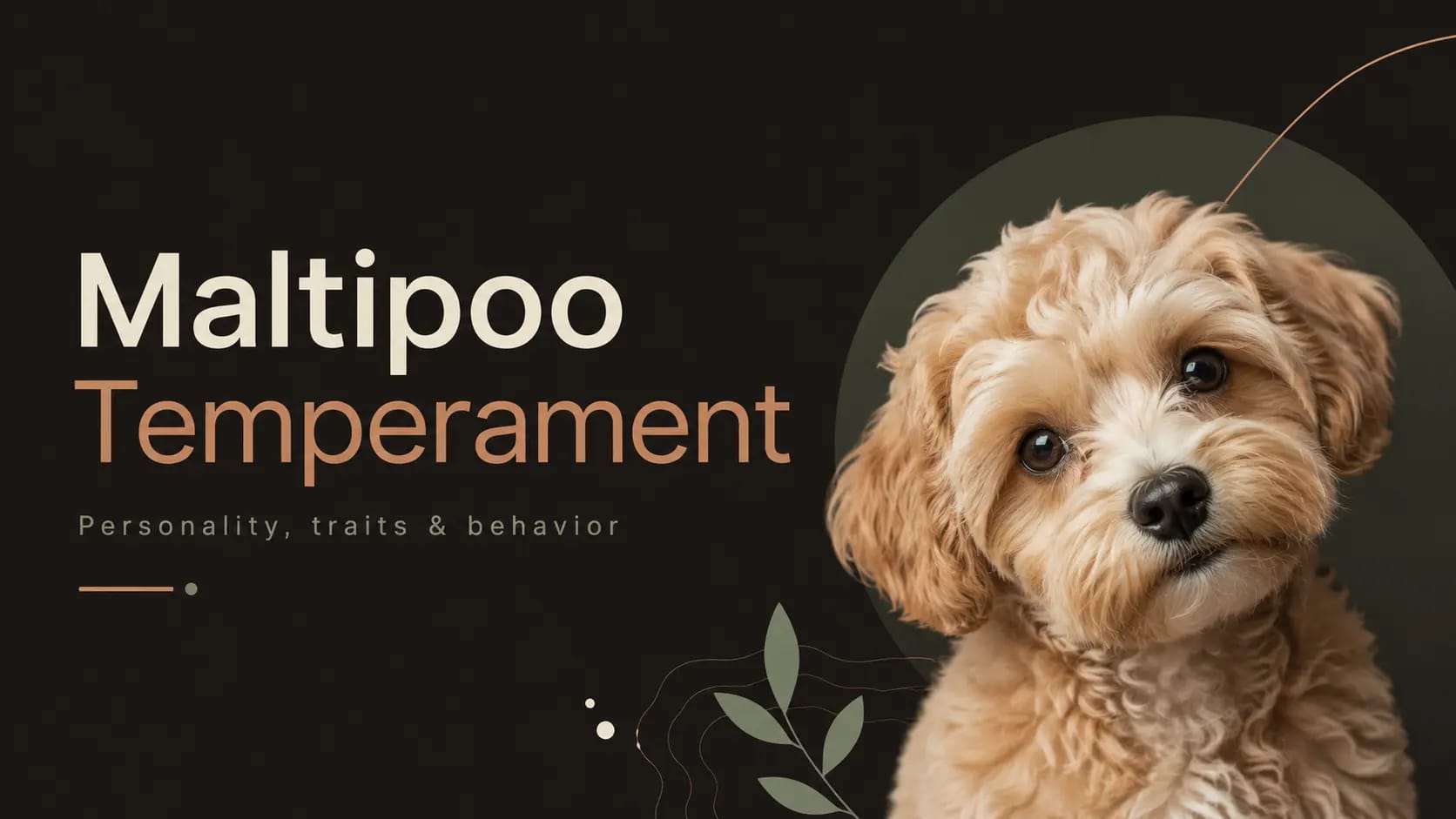
Maltipoos are affectionate, intelligent, and deeply people-focused. They bond tightly with their families, pick up training quickly, and tend to carry a playful, puppy-like energy well into adulthood. For the right home, they are hard to beat as companions.
The flip side of that devotion is that they do not thrive when left alone for long stretches, and a few traits, including a tendency to bark and notoriously slow potty training, catch some owners off guard. This guide covers both sides honestly.
Maltipoo temperament at a glance
| Trait | What to expect |
|---|---|
| Affection | Very high. They want to be near you most of the time. |
| Intelligence | High. Quick learners from both parent breeds. |
| Playfulness | High. Often stays puppy-like to age two or three. |
| Energy level | Moderate. Active but not intense. |
| Trainability | Good. Responds well to positive, consistent training. |
| Barking | Moderate to high. Alert barkers by nature. |
| Separation tolerance | Low. Bonds closely and dislikes being alone. |
| Good with children | Yes, with supervision. Small and delicate. |
| Good with other pets | Generally yes, with early socialization. |
| Best for | Owners who are home often, apartment dwellers, singles, seniors. |
What is the Maltipoo temperament like?
The classic Maltipoo is warm, cheerful, and companion-focused. These are dogs that want to be in the same room as you, ideally on your lap. They are friendly with strangers once comfortable, playful with people they know, and alert enough to notice when something is different without being aggressive about it.
Most Maltipoos retain a puppy-like curiosity and energy into their second or even third year. The breed does not tend to mellow into a purely sedentary lap dog early. Expect an engaged, active small dog throughout its life.
Where the personality comes from
The Maltipoo inherits its temperament from two well-established companion breeds, and both parent breeds contribute clearly defined traits.
The Maltese brings centuries of lap dog breeding. Maltese dogs are devoted, gentle, affectionate, and deeply attached to their person. They can be sensitive to loud or chaotic environments and tend to be vocal, using barking to express themselves and alert their families. That vocal tendency, and the sensitivity, often carry through to Maltipoos.
The Poodle brings intelligence and trainability. Poodles rank among the smartest dog breeds and were bred to work closely with people. They are eager to please, quick to learn patterns and routines, and responsive to consistent handling. The Poodle side is the main reason Maltipoos are as easy to train as they are.
Together, the result is a dog that is emotionally sensitive, socially connected, and mentally sharp.
Maltipoo personality traits in detail
Affectionate and people-focused. Maltipoos form strong bonds with their families and often develop a particular closeness to one person. This is one of their most appealing qualities, and also the root of one of their biggest challenges. A dog that bonds this deeply does not do well with long stretches alone.
Intelligent and curious. The Poodle's intelligence shows up early. Maltipoos pick up commands quickly, notice routines, and stay mentally engaged with their environment. They benefit from puzzle toys, short training sessions, and variety in their day.
Playful well into adulthood. Most Maltipoos keep their playful, enthusiastic energy longer than many breeds. Games, interactive toys, and time with their people keep them happy. This is a breed that enjoys playing and will initiate it.
Alert, occasionally vocal. Maltipoos are natural alert dogs. They notice visitors, sounds, and changes in their environment and tend to communicate about them. This can be endearing or wearing depending on your household. It is manageable with consistent early training.
Sensitive. Maltipoos respond poorly to harsh correction. Raised voices, punishment-based training, and tense environments affect them. They do best in calm, consistent homes with patient handling.
Are Maltipoos good with children?
Generally yes, but with important caveats around size.
Maltipoos are gentle, affectionate, and enjoy playful interaction. In a household where children know how to handle a small dog respectfully, a Maltipoo is usually a good fit. The problem is that a full grown Maltipoo, particularly on the smaller end, is physically fragile. A child who picks the dog up incorrectly, plays roughly, or accidentally steps on it can cause a real injury.
For families with children old enough to understand gentle handling, a Maltipoo can be a wonderful family dog. For households with toddlers who are still learning body boundaries, close supervision is essential every time they interact.
Are Maltipoos good with other pets?
Most Maltipoos get along well with other dogs and cats when introduced and socialized early. They are not aggressive by nature. Smaller pets, such as rabbits or guinea pigs, should be introduced carefully given the Poodle's history as a working dog with some prey drive, though this tends to be mild in Maltipoos.
Early socialization is the key factor. A Maltipoo that meets other animals calmly during puppyhood is far more likely to live harmoniously with them as an adult.
Are Maltipoos easy to train?
For most things, yes. Maltipoos are among the easier small breeds to train. The Poodle intelligence means they pick up commands and patterns quickly, and their eagerness to please makes them responsive to positive reinforcement. Many owners are genuinely surprised by how fast their Maltipoo learns.
The most effective approach is short, consistent sessions using treats and praise, starting as young as possible. Maltipoos respond poorly to harsh correction and can shut down or become anxious if training feels unpleasant.
The exception is potty training. This is where many owners hit a wall. Small dogs have small bladders and need to go out far more frequently than larger dogs, sometimes every two to three hours at puppy age. Consistency, a strict schedule, and patience are essential. Expect the process to take longer than it would with a larger breed. It is not a sign of a stubborn dog. It is a function of size.
Maltipoo temperament problems: the honest challenges
Understanding these before you commit makes everything easier.
Separation anxiety. This is the most common behavioral challenge in the breed. A dog that bonds deeply with its person does not handle extended time alone well. Signs include barking or whining when left, destructive behavior, or toileting inside despite otherwise being house trained. For people who work long hours away from home, a Maltipoo may not be the right fit, or the dog will need careful management, gradual alone-time training, and potentially support from a qualified trainer. For more on how stress affects Maltipoo health, see our Maltipoo health guide.
Barking. Maltipoos are vocal dogs. They bark at strangers, sounds, perceived threats, and sometimes out of boredom or anxiety. Early socialization and consistent training can keep it at a manageable level, but it rarely disappears entirely. If you live in an apartment building with thin walls or need a quiet dog for other reasons, factor this in.
Small dog syndrome. This is not a Maltipoo-specific problem, but small dogs that are over-coddled and never given boundaries can develop pushy, demanding, or anxious behaviors. Maltipoos that are treated consistently and trained like any other dog do not typically exhibit this. The temperament of the dog usually reflects the consistency of the home.
Potty training. As mentioned, this takes longer than most owners expect. Set a schedule, stick to it, reward every outdoor success, and do not punish accidents.
Is a Maltipoo the right dog for your lifestyle?
A Maltipoo is likely a good match if you:
- Are home for a good portion of the day, or work from home
- Want an affectionate, engaged companion rather than an independent dog
- Live in an apartment or a smaller home
- Are patient with grooming and happy to brush several times a week
- Have older children or no children, or young children who can be taught gentle handling
A Maltipoo may not be the best fit if you:
- Are away from home for long stretches most days
- Want a dog that is content with minimal human interaction
- Have very young children who play roughly with animals
- Need a quiet dog
- Are looking for a wash-and-go coat with minimal maintenance
There is no wrong answer. It is just about matching the dog's real needs to your real life.